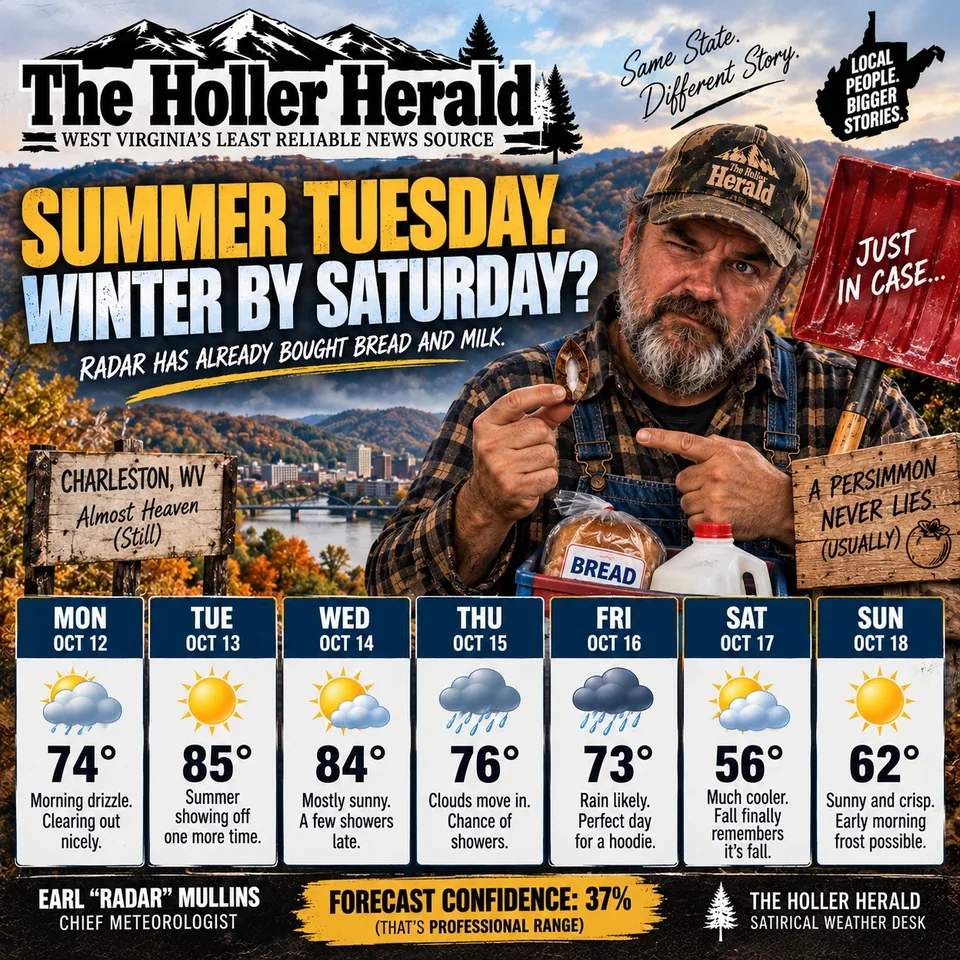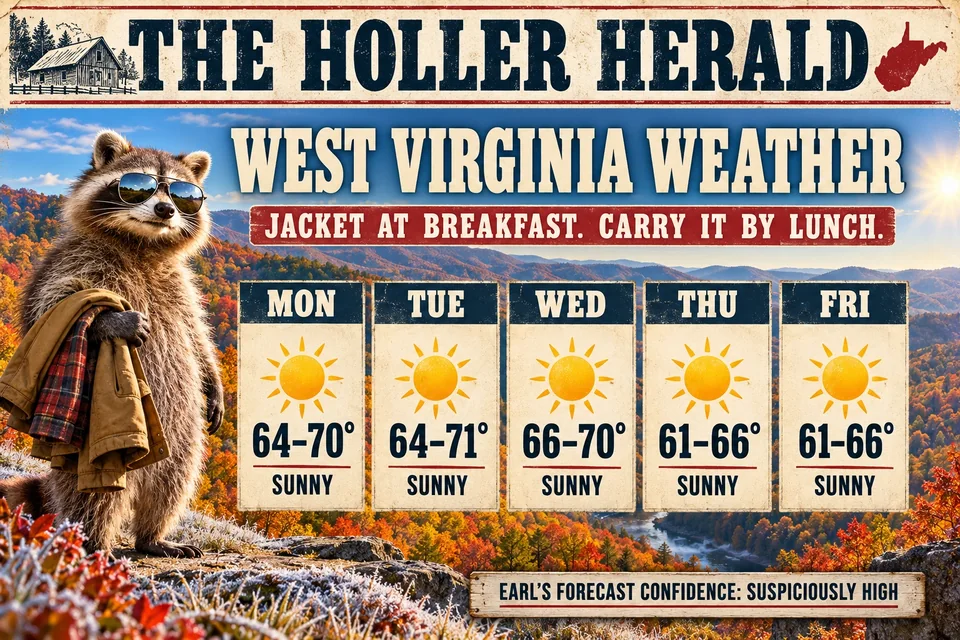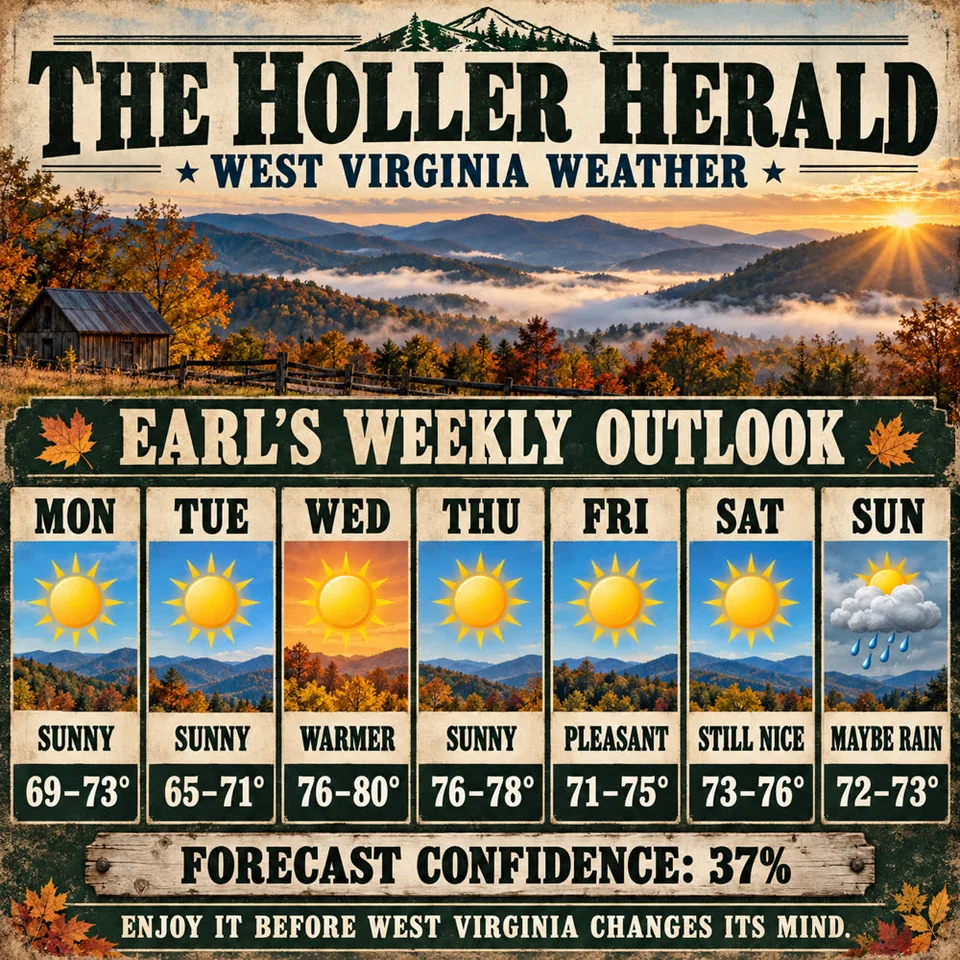
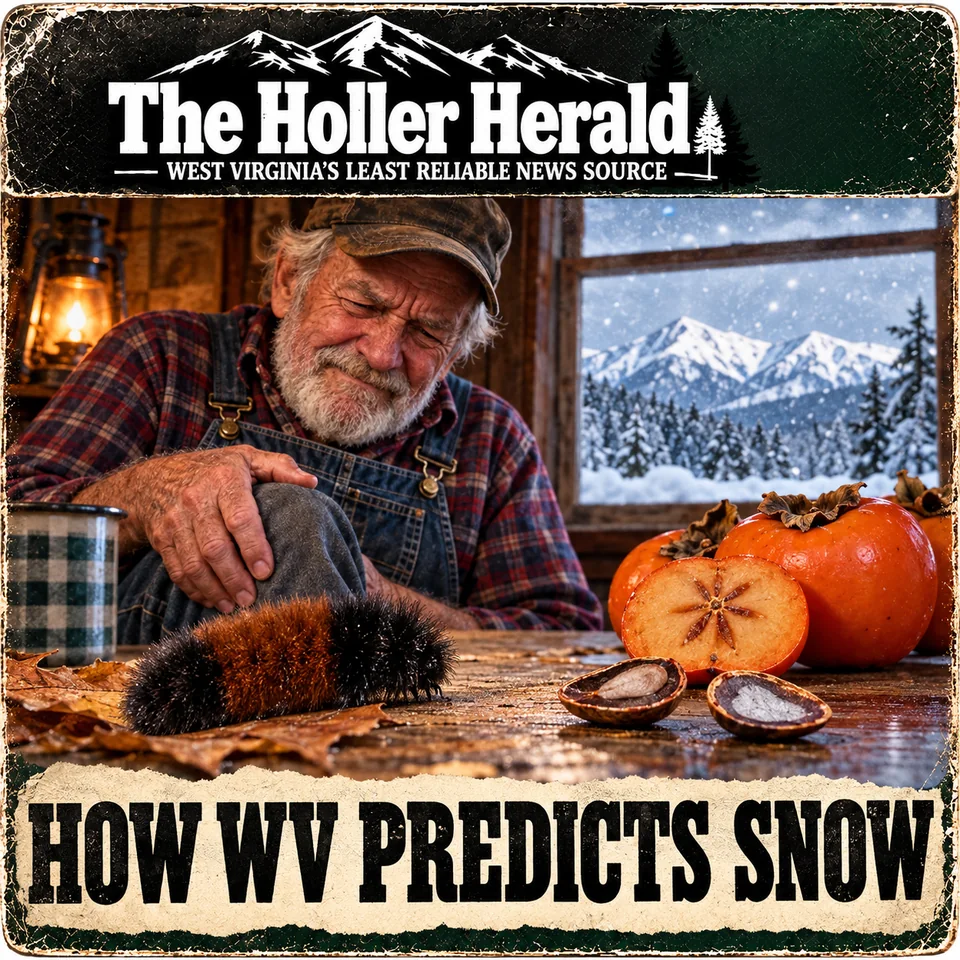
WEST VIRGINIA — Modern meteorologists use satellites, radar and computer models. West Virginians also consider the color of a caterpillar and whether somebody’s left knee has started acting up.
The woolly worm is the state’s smallest unpaid forecaster. A dark band means hard winter. A light band means mild winter. A worm that escapes before examination is withholding data.
Persimmon seeds provide another method. Slice one open and inspect the shape inside. A spoon means shovel snow. A fork means mild conditions. A knife means cutting wind—or that the person explaining the system forgot which utensil means what.
Animal behavior is closely monitored. Thick squirrel nests, busy birds and cows lying down all predict weather, though sometimes they merely indicate that animals have plans of their own.
Human joints remain the most trusted instruments. When a grandparent says rain is coming, cancel outdoor work. When the bad knee predicts snow, buy salt. When both hips join the forecast, locate the generator.
Grocery stores provide the final warning. If bread and milk disappear before the first flake, snowfall is imminent. If toilet paper disappears too, someone shared a map on Facebook with a purple band over the county.
Forecast confidence rises sharply when three unrelated old men mention the same cloud.
Smoke from a chimney, the underside of leaves and the height of hornet nests may also be consulted. No single sign is decisive, which is why experts combine all of them with the Weather Channel and then choose whichever answer sounds most dramatic.
Earl “Radar” Mullins says traditional forecasting remains valuable because it encourages people to pay attention to the world around them.
He also admits his official winter outlook is based mostly on the woolly worm, his left knee and whether the grocery store still has biscuits.