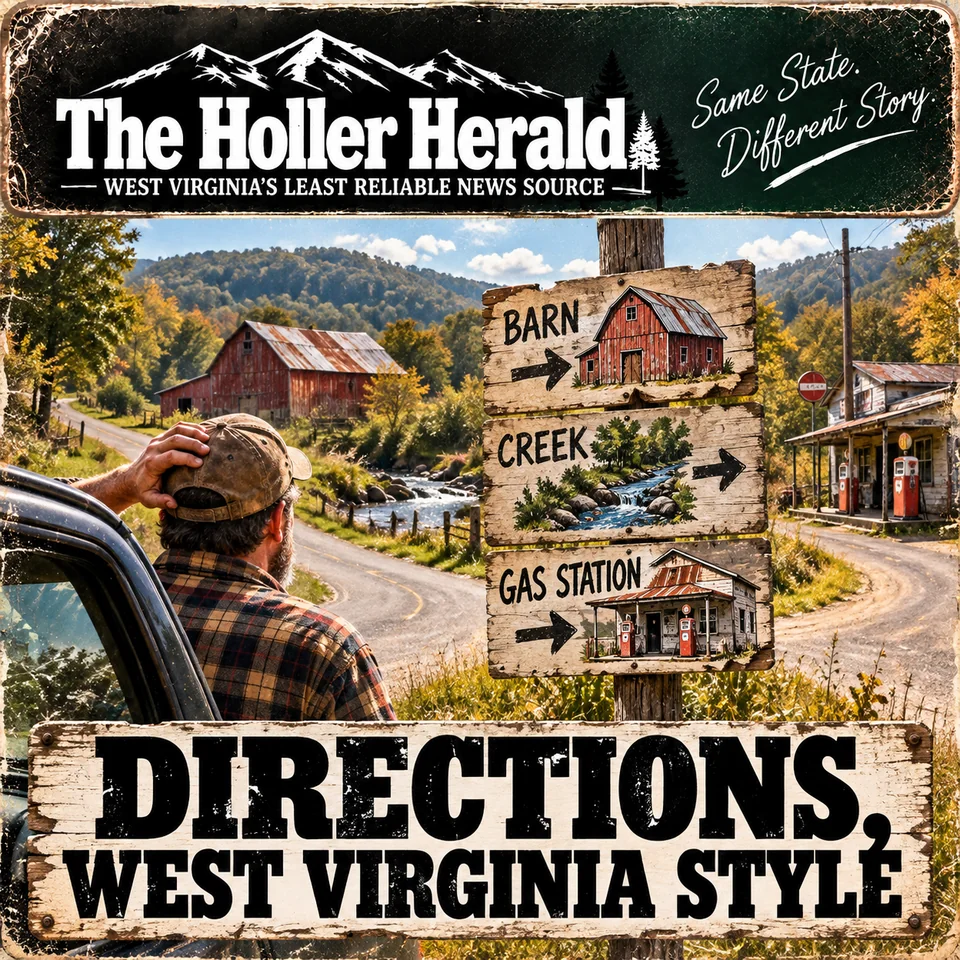
WEST VIRGINIA — GPS works well until it announces that you have arrived while you are staring at a locked gas-well gate. At that point, you need directions from a local.
West Virginia directions are not based on road numbers. They are an oral history of buildings, families, floods and dogs. The person helping you may never mention the name of the road you are currently standing on.
Begin with a vanished landmark. “Go down past where the old store used to be” is standard. The store may have closed in 1987, but everyone who matters knows exactly where it was.
Next comes a visual clue with incomplete information: the red barn, the big sycamore, the house with all the wind chimes or “that place Earl used to have.” Do not ask which Earl. Your guide will assume the answer is obvious.
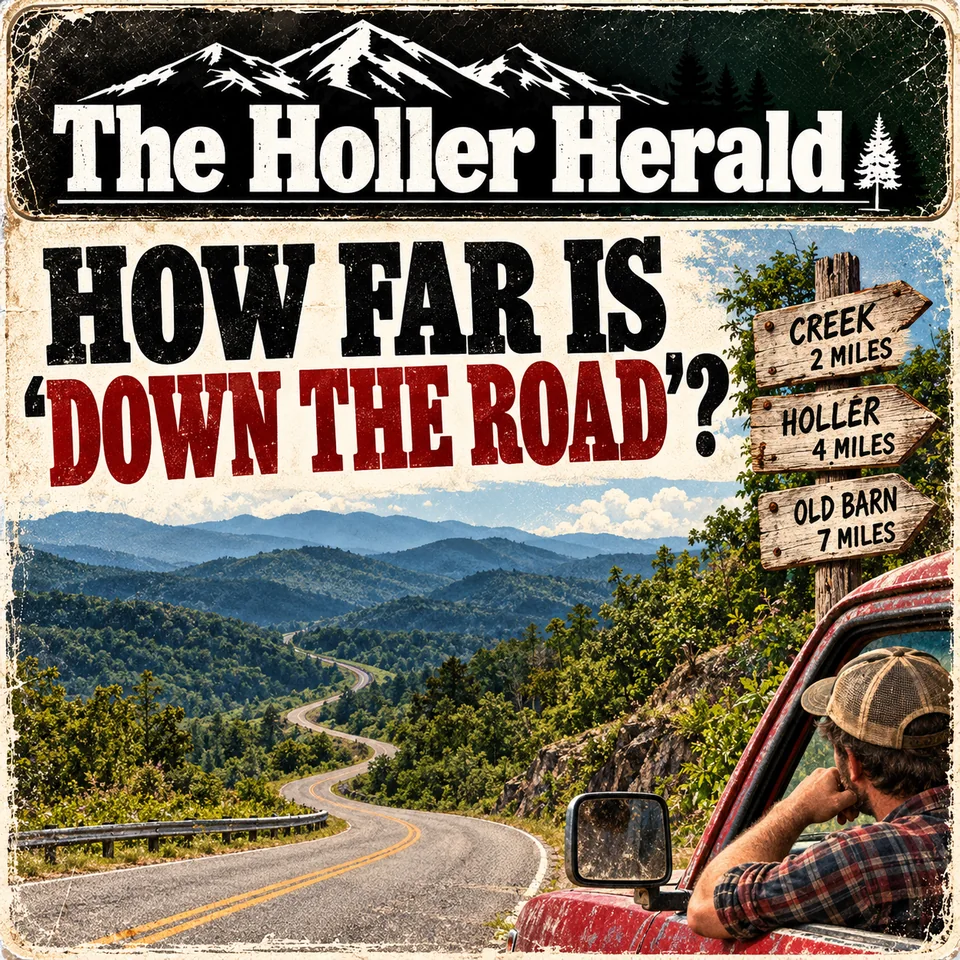
Distance is measured in feelings. “A little ways” may mean half a mile. “Not far” means you should have brought coffee. “Right up the road” can cross a county line if the speaker likes to drive.
Turns are equally flexible. A road that looks like a driveway may be the correct route. A road that looks correct may become a creek. If told to “bear right,” choose the option that appears least private and continue with confidence.
If you pass the church, you have gone too far—unless it is the other church.
The final instruction usually involves a person instead of a place. “It’s across from Linda’s boy’s house” is considered precise, even if you have never met Linda, her boy or anyone in their extended family.
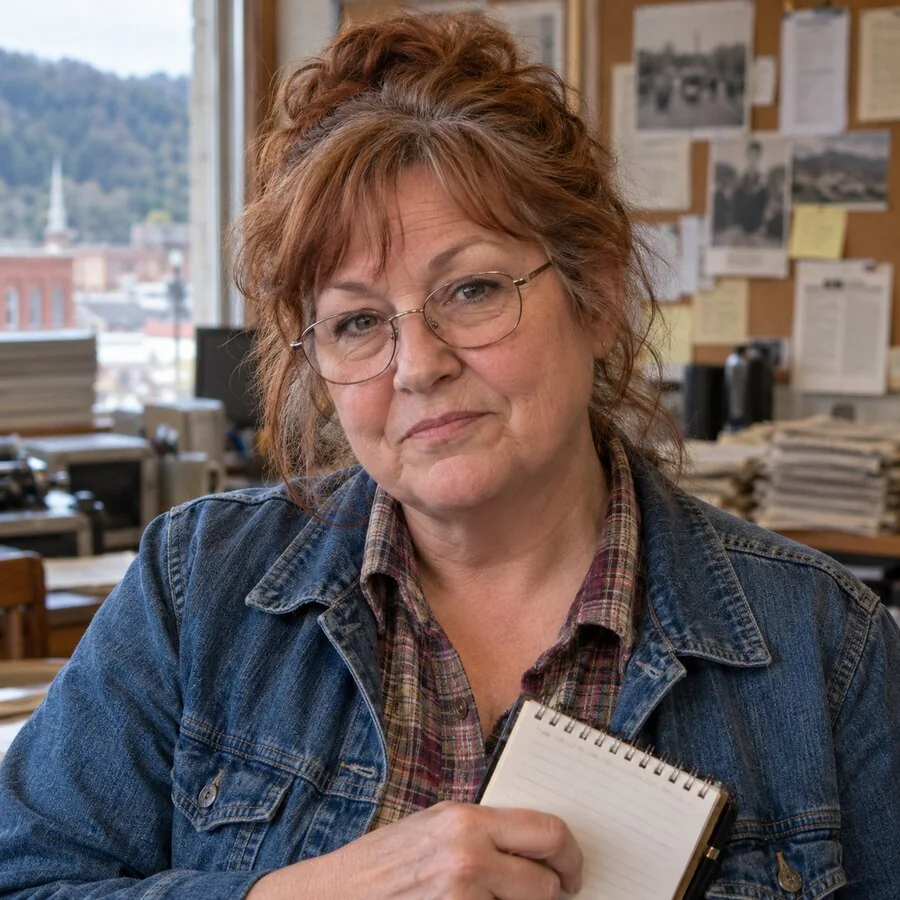
For best results, write nothing down. Nod thoughtfully. Repeat the last landmark and leave before a second person offers a completely different route.
If lost, pull over near a mailbox and wait. Within five minutes someone will ask who you are looking for, identify their grandparents and guide you the rest of the way—probably without using a single road name.