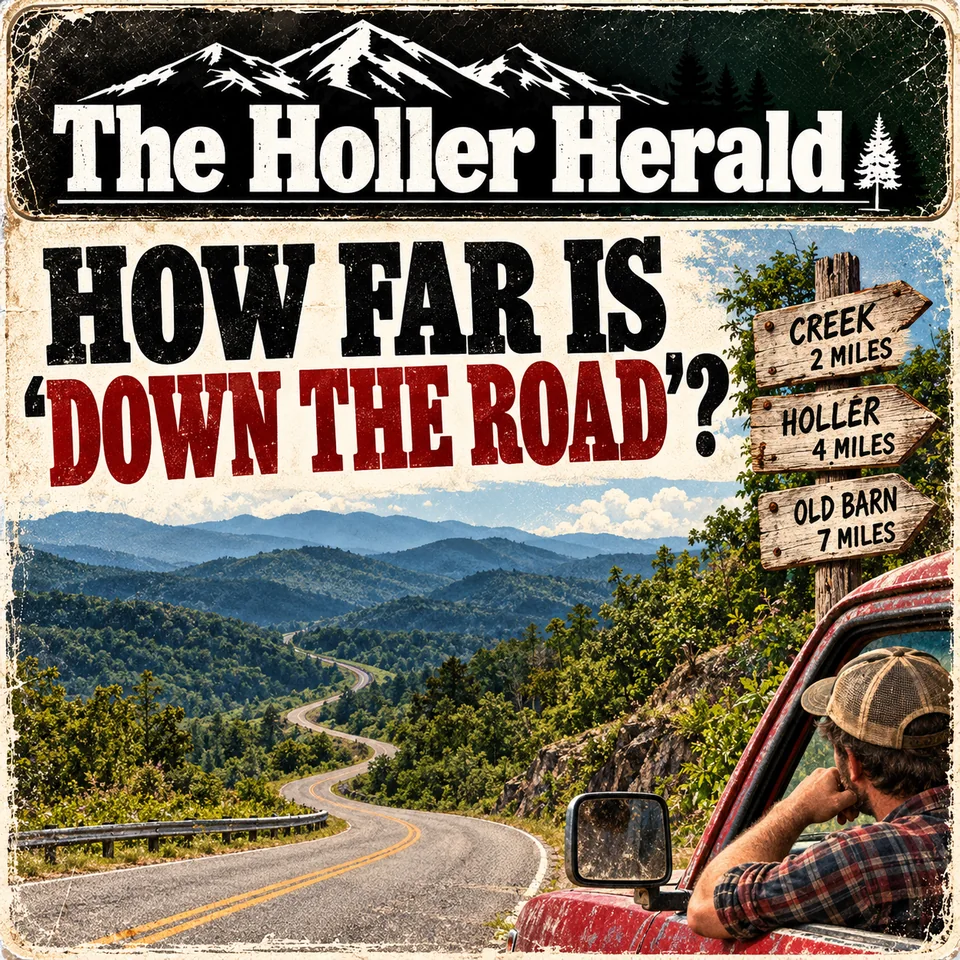
WEST VIRGINIA — The phrase “just down the road” sounds like a measurement. It is actually a promise that the destination can be reached without an overnight bag, though even that has exceptions.
The Holler Herald asked residents to define the distance. Answers ranged from “past the next mailbox” to “about forty minutes unless you get behind a coal truck.”
Unlike miles, down-the-road distance changes according to purpose. A neighbor’s house is just down the road even if it sits across two ridges. A workplace twenty minutes away is “all the way over there.” The same gas station can be close when buying snacks and far when somebody needs help moving a refrigerator.
Road shape matters. Five straight miles are nearby. Five miles containing switchbacks, a one-lane bridge and a dog that sleeps in the pavement are “a little bit out.”
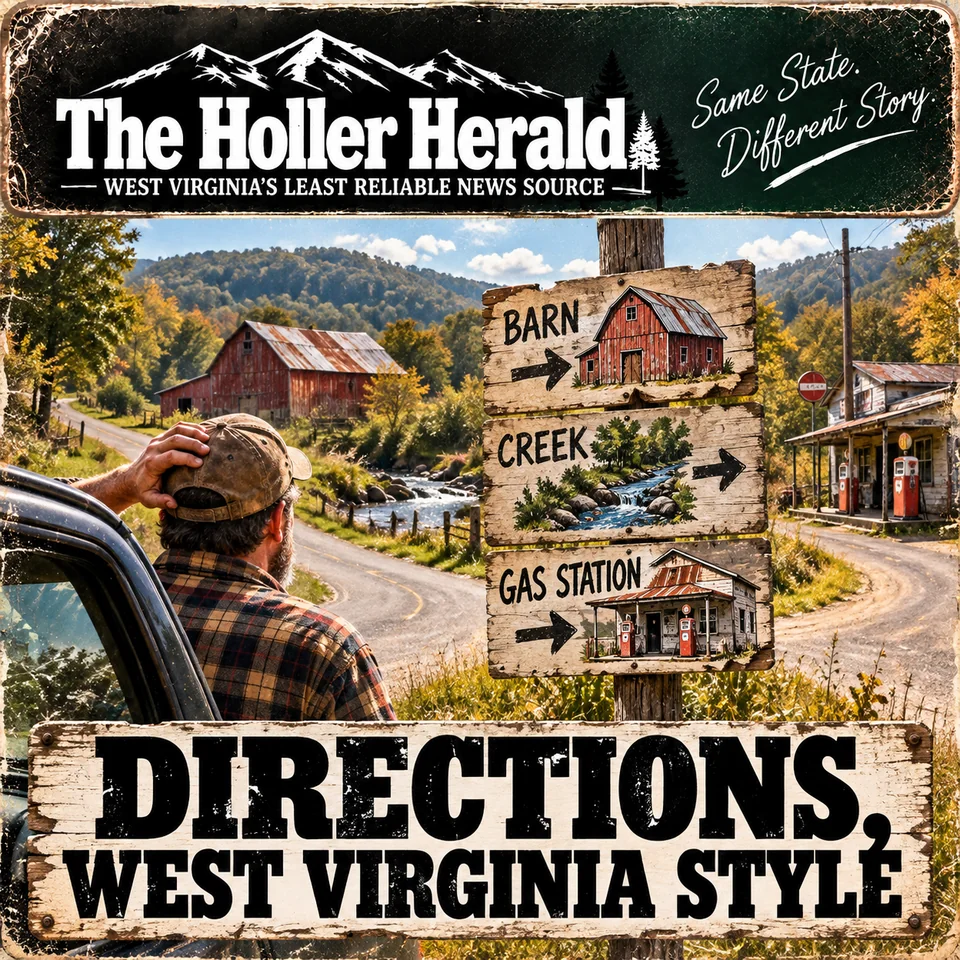
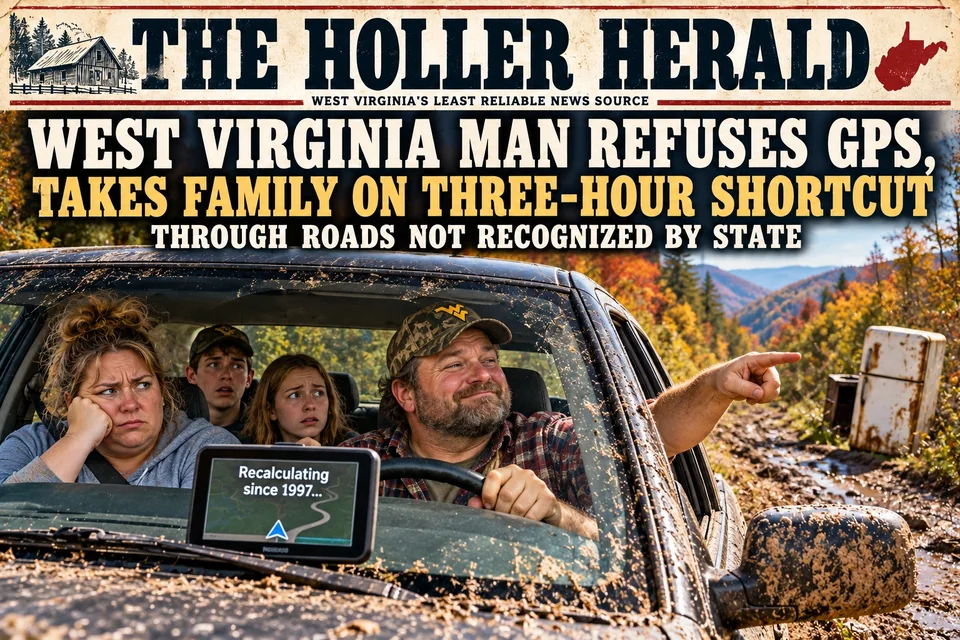
Directions rarely improve the estimate. You may be told to continue until the road “starts getting narrow,” an instruction with limited value on a road that began narrow. Then you turn at the old barn, not the new old barn but the other old barn.
If a local says “you can’t miss it,” prepare to miss it at least once.
Travel time is also affected by mandatory conversations. Stopping for fuel may require updates on three families and an explanation of why the bridge project is taking so long. This delay is not included in the original estimate.
Experts recommend translating phrases as follows: “right there” means under ten minutes; “just down the road” means ten to thirty; “a good piece” means bring coffee; and “you might want to fill up first” means reconsider the trip.
No resident interviewed saw a problem with the system. Roads curve, mountains intervene and everybody eventually gets where they are going. Measuring the journey too precisely would only remove the surprise.