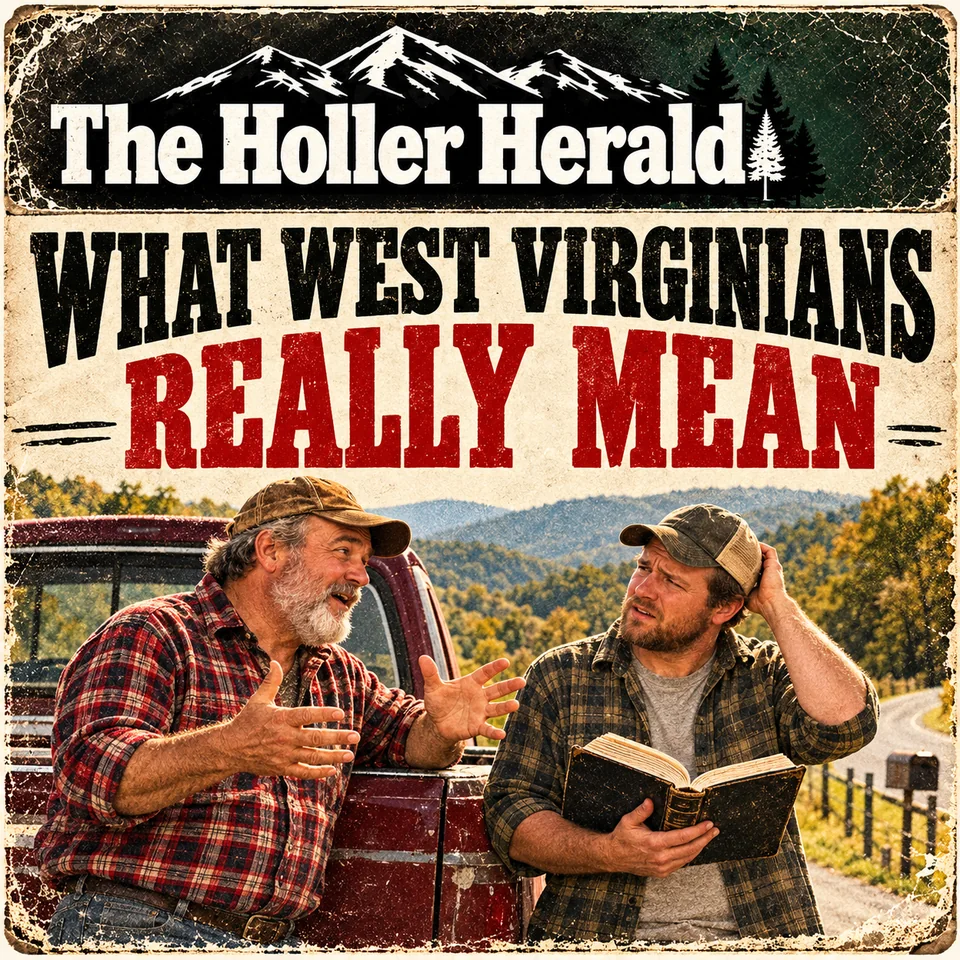
Visitors occasionally claim they cannot understand West Virginia expressions. The expressions are fine. The visitors simply require training.
1. “Might could.” It is possible, but commitment has not been authorized.
2. “Over yonder.” A specific place visible to the speaker and obvious to no one else.
3. “A good piece.” Farther than you hoped.
4. “Right down the road.” Distance unavailable. Bring gas.
5. “The other day.” Any time between Tuesday and the late 1990s.
6. “Bless your heart.” Meaning depends entirely on tone. Proceed with caution.
7. “I reckon.” Yes, probably, unless new information appears.
8. “Fixing to.” Preparation has begun. Completion remains negotiable.
9. “That dog won’t hunt.” Your plan is flawed and everyone knows it.
10. “Carry me to the store.” Provide transportation. Lifting is not required.
11. “Do what?” Please repeat that, especially the part that sounded foolish.
12. “He’s a character.” Legal counsel has advised against a fuller description.
13. “It’s trying to rain.” The sky has started but lacks commitment.
14. “That’s different.” Nobody likes it.
15. “I don’t care to.” Depending on county and context, this may mean yes. Visitors should confirm.
16. “Pretty near.” Almost, or close enough that details are no longer useful.
17. “Up the holler.” A precise regional location that may not appear on a map.
18. “Come sit a spell.” Your schedule has been canceled.
19. “We’ll see.” Frequently no, occasionally yes, never settled.
20. “You’uns.” More than one of you, all of whom should already understand this list.
West Virginia English is not incorrect. It simply carries more information than outsiders are prepared to receive.
Use these phrases respectfully and do not perform an exaggerated accent. If confused, smile and ask what someone means. You will receive an explanation, a family story and directions that involve a store that closed thirty years ago.